
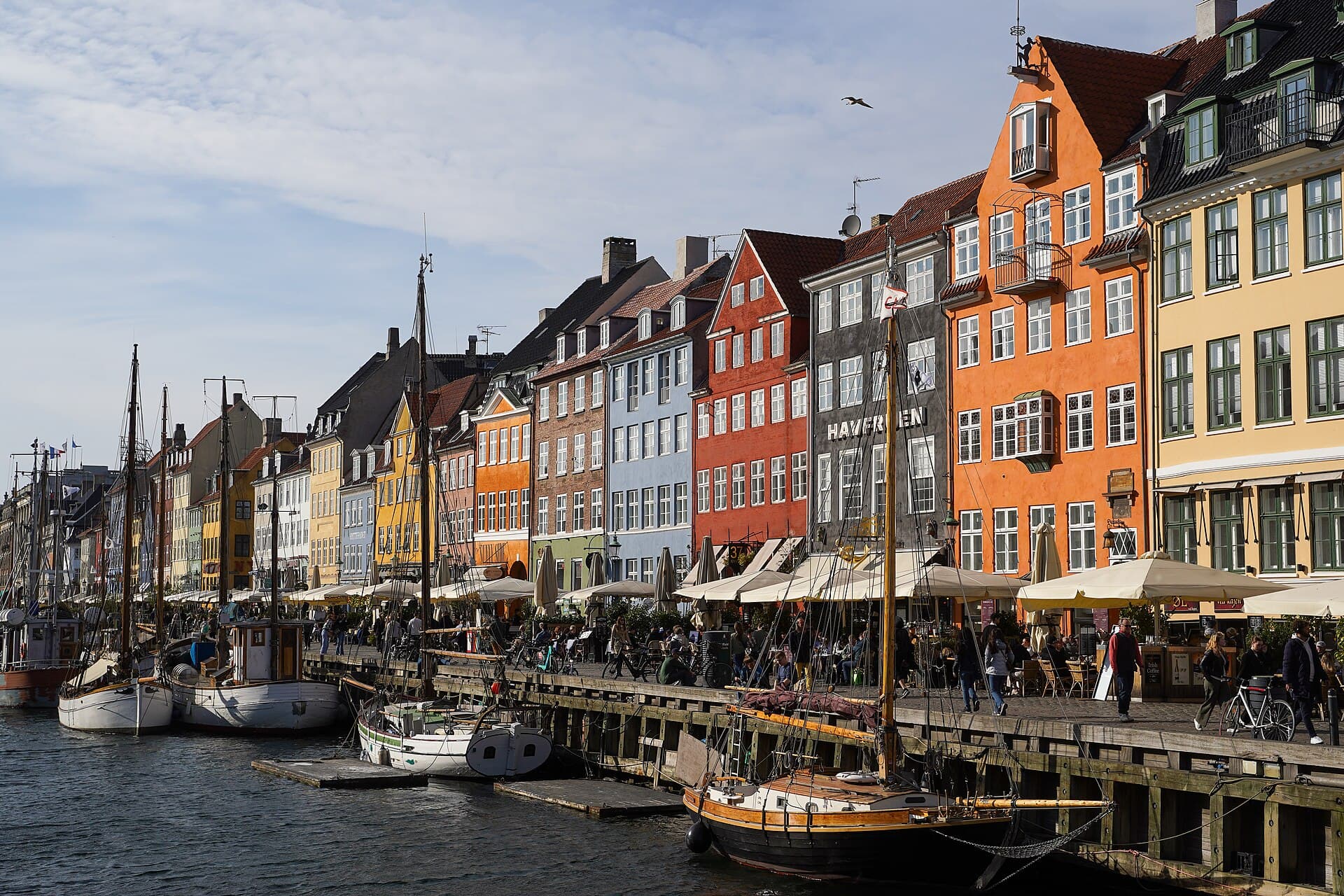
Study in Denmark
Practical, project-based degrees in one of Europe's happiest societies
Tuition (per year)
€8,000–€16,000 / year (DKK 60,000–120,000)
Living costs
DKK 84,000–120,000 / year (€11,000–16,000)
Intakes
September (main), February (limited programmes)
Denmark teaches differently: expect real company projects, small classes and professors who know your name. For Bangladeshi students, the practical appeal is just as strong — well-paid part-time work, a three-year job-seeking period granted alongside your studies, and English spoken almost everywhere. Danish design, green energy and pharmaceutical industries actively recruit international graduates with the right skills.
Why Denmark?
- Three-year job-seeking period attached to your residence permit
- Project-based teaching with close industry involvement
- Part-time wages among the highest in Europe
- Plentiful English-taught programmes and English-friendly daily life
- Regularly ranked among the safest, happiest countries on earth
Entry requirements
Undergraduate
- HSC plus one year of university study, or an accepted foundation, to match Danish entry level
- IELTS 6.0–6.5 overall depending on programme
- Motivation letter and full academic transcripts
- Proof of living funds of roughly DKK 6,600+ per month for the permit
Postgraduate
- Relevant bachelor's degree closely matching the master's curriculum
- CGPA 3.0+ recommended for competitive programmes
- IELTS 6.5 overall with no band below 5.5–6.0 depending on university
- Motivation letter, CV and a course-by-course credit match with the Danish syllabus
Work rights & post-study options
International students may work up to 20 hours per week during the semester and full-time through June, July and August. Graduates automatically receive a three-year job-seeking period, giving generous time to convert a Danish degree into a Danish career.
Frequently asked questions
Why do strong applicants still get rejected by Danish master's programmes?
Danish universities check credit match, not just CGPA — your bachelor's coursework must align closely with the master's curriculum, sometimes subject by subject. We map your transcript against each programme before applying so you only target courses where you genuinely qualify.
How much money must I show for the residence permit?
If tuition is not fully paid in advance, you must show living funds of roughly DKK 6,600+ per month for the first year in your own account. Many students simplify matters by paying the first semester's tuition up front.
Can part-time work realistically cover my living costs?
At DKK 120–150 per hour, twenty legal weekly hours cover a substantial share of living costs, particularly outside Copenhagen. Embassies still expect full funds shown up front, so never present expected earnings as your funding plan.
Do I need Danish to study or work there?
Your degree can be entirely in English and many employers operate in English, but free Danish courses are offered to residents and learning the language widens both part-time and graduate opportunities considerably.
Ready to start your journey abroad?
Book a free one-to-one consultation with our counsellors — we'll map out your options, costs and timeline in under an hour.